Avoiding AI may have felt like a safe decision last year. In 2026, it’s a risk. As the new year begins, recruiting teams are facing a different landscape where speed, engagement, and scalability are no longer optional. The expectations from candidates have increased, while the pressure on recruiters to deliver results has only intensified.
The Gap Is No Longer Theoretical
The difference between recruiting teams in 2026 will come down to enablement, not effort. Teams that continue relying on manual workflows are finding it harder to keep up with applicant volumes, hiring timelines, and candidate expectations for immediate engagement. At the same time, forward thinking organizations are operating differently. They’ve moved beyond debating whether AI “fits” into recruiting and are now focused on how it improves performance.
From Resistance to Results
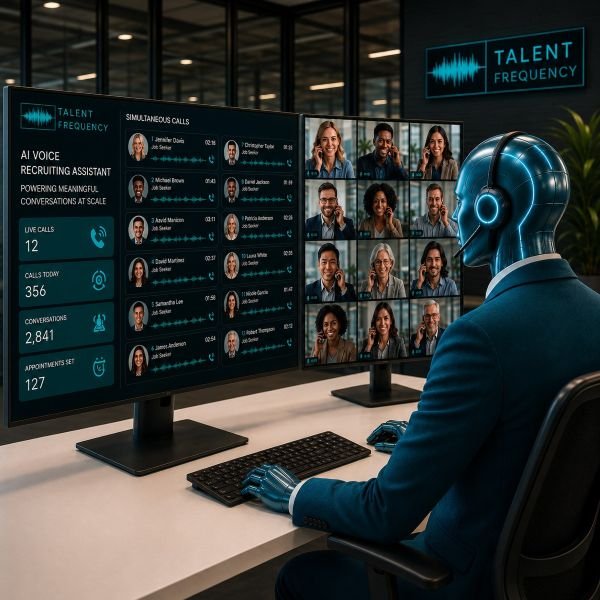
At TALENT FREQUENCY, we partner with Fortune 500 companies and technology forward organizations that have already made the shift. These teams are no longer asking, “Will AI work?” They’re asking, “How far can we scale with it?” Our “AI Voice Recruiting Assistants” are now embedded into their workflows as a performance multiplier. They ensure that candidate engagement happens consistently, even when recruiter capacity is limited.
What Talent Frequency Delivers
- Consistent pre-screening at scale, ensuring every candidate is engaged
- Structured, recruiter-ready data, delivered directly into ATS/CRM systems
- Increased recruiter productivity, removing repetitive outreach tasks
- A seamless workflow integration, without adding complexity or friction
Digital labor handles repetition. Human recruiters focus on hiring outcomes.
The New Standard for Recruiting Success
The most successful recruiting teams in 2026 won’t be the busiest, but they will be the most enabled. AI is no longer a future investment; it is a present advantage. The organizations that embrace it are already seeing the impact across performance, speed, and candidate engagement. The question isn’t whether AI will shape recruiting, because it already is.
The question is whether your team will lead with it or work to catch up later.